Ranchers Close In as the Pardo River Kawahiva Tribe Continue to Need Protection.
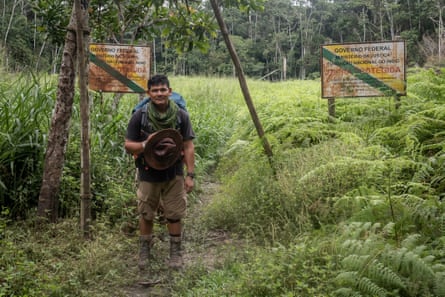
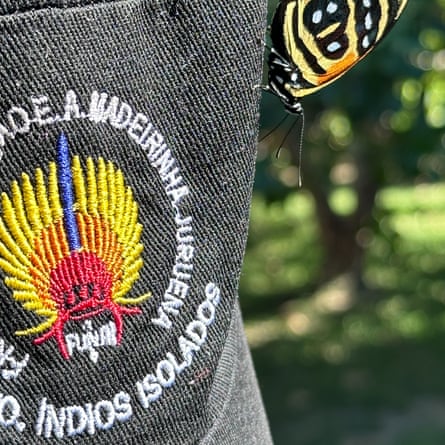
In recent times, specialists from the federal body for tribal groups journeyed over 100 kilometers through dense rainforest on the southern border of the Amazon region. Their objective was to observe and aid in safeguarding an tribe with no sustained communication with the contemporary society.
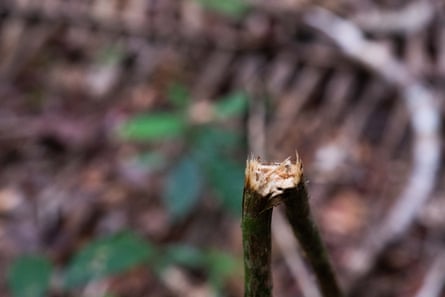
Their findings included a handcrafted item made from forest foliage, a child’s footprints by a riverbank, and branches recently hacked to collect bee honey. They also found former dwellings being reclaimed by nature and shells from gathered nuts near extinct campfires. These were all telltale indicators that the isolated tribe continued to inhabit the region.
Government Inaction Block Constitutional Protection
Despite a judicial directive calling for a protection plan for the isolated community, the federal administration has not followed through. The court-ordered plan included speeding up the boundary setting of their ancestral domain and explaining deforestation reduction strategies.
Administrative holdups, budgetary constraints, and violent land conflicts—featuring aggressions by leaders linked to the logging industry—have stalled the entire process.
Without established perimeters, loggers and ranchers keep moving in, leaving the Kawahiva at grave risk of cultural eradication. Advocates label the delay a intentional and dangerous breach of the country's constitution.
“The inaction in demarcation is not only illegal, it is also profoundly hazardous.”
Encroaching Deforestation
The planned vast Indigenous land has yet to receive full protection, as required by law. It is considered the biggest undefended woodland in Brazil that is inhabited by isolated tribes.
On the edges of the territorial limits, the landscape changes dramatically. The land is scorched for pastureland. Fences and gates are going up, and new roads are pushing further into the pristine forest.
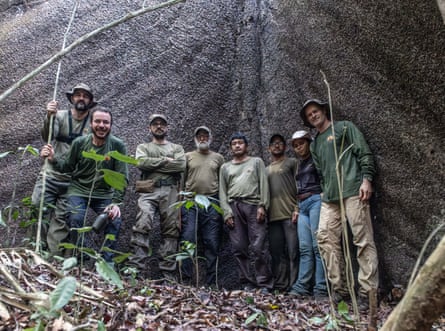
Following the expedition, a director for land defense vowed to address the issue. “We are employing all possible efforts to ensure that the Kawahiva land gets official status,” the official stated.
Financial Obstacles and Growing Threats
The boundary marking of the vast territory involves placing concrete markers. This is seen as a crucial action to demonstrate to loggers and farmers that the authorities are committed about defending the land. However, the process remains stalled.
Financial resources has been a key challenge. Initial plans to use federal payments from a highway project fell through. The agency has since looked for alternative funding.
It has now initiated a partnership with a university institute. “It’s a technical partnership that we’ve already had success with,” explained an official. “The demarcation process is projected to begin in early 2026.”
The institute stated that talks were progressing but did not specify when work would begin.
Complicating everything is what officials term a “highly tense environment in the region,” which is expected to require an law enforcement escort during any field operations.
Hostile Actors
The threat of violence is real. In previous years, an group of invaders assaulted a government base in the territory, resulting in a violent clash where one attacker was killed. More recently, national force officers were present in the area.
Earlier this year, an threatening communication surfaced in which a man, identifying as a local leader, threatened the lead field agent. The individual, linked to local loggers, stated to have searched the land “searching for those isolated Indians.”
He is under indictment for several illegal activities, including charges related to the violent assault on the agent. “Activities are blocked because of this guy,” the man said in the recording.
The Political Clock
Anthropologists and experts point out that it has been over a quarter-century since the existence of the uncontacted people was confirmed. “Throughout this time, land-grabbers have sought to overturn the land declaration in court,” noted one expert.
They raise a worrying prospect: that the ongoing stalling is a political obstacle rather than a procedural one. This leads to fear that demarcation may not happen even in the coming year.
The upcoming elections adds urgency. Many believe that the next two years represents the final opportunity for this demarcation effort to be achieved, before a potential change in government could freeze protective measures, as occurred in the past.
The supreme court directive was the result of a legal action filed by a coalition of native peoples. The court acknowledged the “threat of elimination, starvation, and cultural loss” facing the community.
A lawyer involved described the process as “stalled,” with the court awaiting compliance. The risks of inaction are stark. “Moreover, it is extremely dangerous and endangers the lives of the isolated Kawahiva,” warned a representative from an rights organization.